
Share this post:
Quick summary: Best Suit Colours for Men
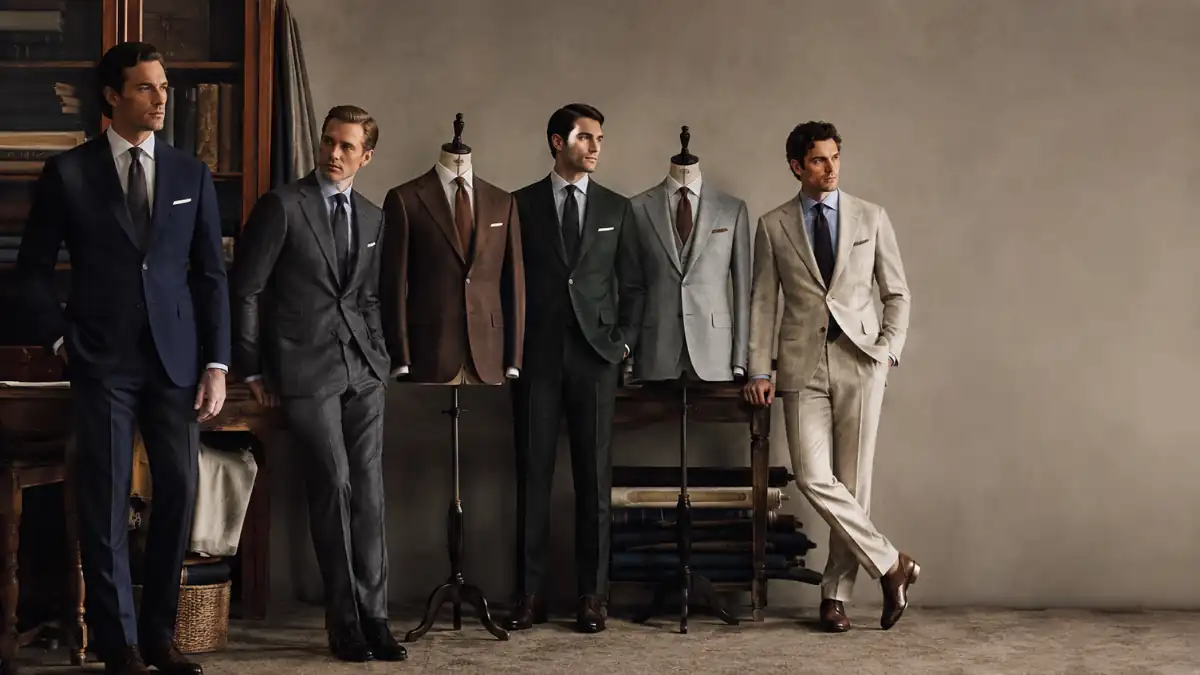
Choosing the Best Suit Colours for Men is less about following a rigid fashion rule and more about choosing colours that suit the occasion, work with your existing wardrobe and make you feel appropriately dressed. For most gentlemen, navy and charcoal grey remain the strongest foundations because they move comfortably between business, weddings, formal occasions and smart social events.
- Best first suit: navy or medium-to-charcoal grey for maximum versatility.
- Best business colours: navy, charcoal and restrained mid-grey.
- Best wedding choices: navy, mid-blue, grey and lighter seasonal shades where the dress code allows.
- Best summer colours: light grey, stone, beige, pale blue and softer earth tones in an appropriate lightweight cloth.
- Best statement colours: forest green, burgundy, tobacco and deeper brown once the essential wardrobe is covered.
Colour is only one part of a successful suit. Fit, cloth, proportion and occasion matter just as much. A beautifully fitted charcoal suit will generally look more distinguished than a fashionable colour in the wrong cut. That is why we recommend choosing colour as part of the complete tailoring picture rather than in isolation.
Not sure which suit colour will work best for you?
Our team can help you consider the occasion, cloth, complexion, existing wardrobe and the way you intend to wear your suit before you settle on a colour.
What are the Best Suit Colours for Men?
When a gentleman asks us about the Best Suit Colours for Men, our first response is rarely to name one fashionable shade. Instead, we look at where the suit will be worn, how often it will be used and what else already exists in the wardrobe.
For somebody building a serious tailoring wardrobe from the beginning, navy and grey are difficult to improve upon. They are restrained enough for business, polished enough for important occasions and flexible enough to work with numerous shirts, ties, shoes and accessories.
However, that does not mean every man should own five nearly identical dark suits. Once the essential colours are covered, brown, green, lighter blue, stone and more individual cloths can add considerable character.
Colour should also be considered alongside the way the garment sits on your body. If you are still refining that part of your wardrobe, our parent guide, how a properly tailored suit should sit, explains jacket length, shoulder fit, trouser line and overall proportion in detail.
The most versatile suit colours for a gentleman’s wardrobe
If you want the greatest number of outfits from the smallest number of suits, think in terms of a wardrobe hierarchy. Some colours are natural foundations, while others are better introduced after those foundations are established.
Navy: perhaps the most versatile suit colour
Navy is often the safest place to begin. It is professional without appearing severe, formal without being sombre and easy to combine with white, pale blue, soft pink and subtly striped shirts.
A well-chosen navy suit can cover an extraordinary amount of ground:
- business meetings,
- job interviews,
- graduations,
- weddings,
- dinners,
- formal daytime events, and
- many smart social occasions.
Navy also gives you considerable freedom with accessories. Brown, oxblood and black footwear can all work depending on the formality of the outfit.
Charcoal grey: refined, formal and dependable
Charcoal is slightly more serious than navy. Consequently, it is an excellent choice for professional environments, important meetings, formal daytime wear and occasions where understatement is desirable.
Because charcoal itself is neutral, it allows the shirt, tie and texture of the cloth to provide interest. A white shirt gives a crisp business appearance, while pale blue softens the combination.
Mid-grey: an extremely useful second or third suit
Mid-grey is less formal than charcoal and therefore particularly useful for men who want something appropriate for both office and social wear. It works throughout much of the year and combines readily with blue, white, pink and patterned shirts.
In addition, a textured mid-grey cloth can feel distinctly different from a smooth charcoal business suit even though both belong to the same colour family.
Mid-blue: more relaxed than navy
A medium or slightly brighter blue can be excellent for weddings, daytime events, hospitality and smart occasions where a traditional navy suit feels a little too corporate.
However, very bright blue tends to be less versatile. If the suit is intended to remain in your wardrobe for many years, we usually favour restrained, complex blues rather than highly saturated fashion shades.
Brown and tobacco: sophisticated alternatives
Brown tailoring has considerable depth when the cloth is chosen carefully. Chocolate, tobacco, taupe and muted earth shades can look particularly elegant in textured wool, flannel, linen blends and seasonal fabrics.
These colours are generally less formal than navy or charcoal, so they are particularly successful for smart daytime dressing, relaxed business environments and social tailoring.
Green and burgundy: colour with restraint
Forest green, olive and very dark burgundy can provide individuality without becoming theatrical. The important point is depth. A dark, muted colour is normally easier to wear repeatedly than a vivid fashion shade.
How to choose the best suit colour for you
Internet searches often reduce colour selection to questions such as “what colour looks best on guys?” In practice, good tailoring is more considered than that. There is no universal colour that flatters every man more than every other colour.
Instead, we suggest working through four questions.
Step-by-step: how to choose a suit colour
- Decide where the suit will be worn. A boardroom suit and a summer wedding suit may require very different levels of formality.
- Look at the suits you already own. If you already have navy and charcoal covered, another neutral may offer less value than a carefully selected brown, green or lighter seasonal cloth.
- Consider your shirts and shoes. A useful suit should work with several pieces already in your wardrobe rather than requiring an entirely new collection of accessories.
- View the actual cloth against you. Small differences in undertone, texture and depth can change how a colour appears next to your face.
- Judge the colour in natural light. Artificial showroom lighting can make navy, grey, brown and green look quite different from their appearance outdoors.
- Think beyond the current season. A bespoke or well-made suit should remain useful long after a temporary trend has passed.
Cloth itself has a considerable influence. A flat worsted navy and a textured navy hopsack may technically share a colour, yet they can feel very different when worn. Our guide to choosing suit cloth and fabric explains how fibre, weave, weight and texture change the character of a suit.
Choosing between two or three cloth colours?
We can help you consider the colour as part of the complete commission — including fit, fabric, shirt options and how often you are likely to wear it.
Best suit colours for men by occasion
Occasion should influence colour more than fashion alone. The right shade helps the wearer look comfortable in the setting rather than conspicuously overdressed or underdressed.
Best suit colour for a university graduation
Navy, charcoal and mid-grey are particularly sensible graduation choices. A graduation suit often needs to serve several purposes afterwards, perhaps for interviews, work, weddings or formal dinners.
Navy is especially adaptable because it photographs well, works with academic dress and can later become a dependable professional suit.
Best suit colours for weddings
For a traditional wedding, navy and mid-grey remain excellent choices. However, the season and level of formality allow more freedom than a conservative office environment.
For spring and summer weddings, you might consider:
- mid-blue,
- light-to-medium grey,
- stone,
- taupe,
- soft olive, or
- restrained tobacco.
Evening and very formal weddings normally favour deeper colours. Most importantly, check the stated dress code before deciding.
Best formal suit colours
Navy and charcoal are the principal choices for a conventional business suit. Dark grey can appear particularly authoritative, while navy offers slightly more warmth and flexibility.
Black is sometimes assumed to be the most formal everyday suit colour. In traditional menswear, however, a plain black lounge suit is less versatile than many men expect. It is strongly associated with evening wear, certain formal uniforms and sombre occasions, whereas deep navy or charcoal usually provides more everyday options.
Best casual suit colours
Relaxed tailoring permits much more personality. Brown, olive, tobacco, stone and softly textured blue all work well when the jacket construction, shirt and footwear are similarly relaxed.
An open-neck well-fitted tailored shirt can also soften a suit considerably, especially when combined with loafers or suede shoes.
Best suit colours for different complexions and hair colours
Search results commonly ask for the best suit colours for dark skin, brown skin, red hair, grey hair or blonde hair. Those descriptions can provide a starting point, but they should not become rigid rules.
Two men described as having the same skin colour can have different undertones, hair colour, eye colour and levels of contrast. Therefore, looking at the actual cloth beside the face is much more useful than selecting a suit from a colour chart alone.
Suit colours for darker complexions
Deeper complexions can carry an exceptionally wide range of tailoring colours. Navy, charcoal, mid-grey, cream, tobacco, olive and many blues can all work beautifully.
Instead of assuming that one colour category is automatically “best”, look at whether a particular cloth gives healthy contrast around the face and whether its undertone harmonises with your colouring.
Suit colours for brown skin tones
Navy, medium grey, deep green and warmer earth colours can all be successful. However, the individual undertone matters. A cooler grey may flatter one gentleman while a warmer taupe or tobacco may look better on another.
Best suit colours for men with red hair
Navy, charcoal, mid-grey and many green tones can provide attractive contrast with red or auburn hair. Muted olive and forest shades can also work particularly well where the occasion allows something more individual.
Very orange-toned browns can sometimes compete with strongly warm hair, so we would normally compare several cloths rather than relying on a rule.
Suit colours for men with grey hair
Grey hair often works particularly well with navy, rich blue, charcoal and deeper greens. The contrast between silver or white hair and a dark jacket can be extremely distinguished.
Suit colours for blonde-haired men
Navy and mid-grey are dependable, while softer blue and brown shades can work well for less formal tailoring. Again, complexion and contrast matter more than hair colour alone.
Best suit colours for men in summer
Summer changes both colour and fabric. Lighter shades naturally feel more seasonal, but a pale colour in a heavy cloth will not necessarily be comfortable. Therefore, colour should be chosen together with fibre, weave and cloth weight.
Popular warm-weather choices include:
- light grey,
- pale or mid-blue,
- stone and beige,
- taupe,
- tobacco,
- olive, and
- cream for suitably relaxed occasions.
Linen, high-twist wool, tropical wool and selected wool blends can each produce a different summer character. Colour should never be considered without asking how the cloth will drape, breathe and recover during wear.
Best suit colour combinations for shirts, ties and shoes
A good suit colour becomes much more valuable when it works with several shirts and accessories. Rather than thinking of the suit as an isolated garment, consider the complete combination.
Navy suit combinations
- White shirt: crisp and formal.
- Pale blue shirt: understated and very versatile.
- Soft pink shirt: adds warmth without becoming loud.
- Burgundy tie: a classic contrast.
- Dark brown or oxblood shoes: excellent for many daytime settings.
- Black shoes: useful where greater formality is required.
Grey suit combinations
- White shirt: clean and businesslike.
- Blue shirt: introduces gentle contrast.
- Navy tie: restrained and dependable.
- Burgundy accessories: add controlled warmth.
- Black shoes: particularly effective with charcoal.
- Dark brown shoes: often attractive with lighter or mid-grey.
Brown and earth-tone suit combinations
White, cream, pale blue and subtle stripes can all work. Texture also becomes especially useful here: knitted ties, suede shoes and softer shirting can complement the less formal nature of brown tailoring.
Shirt proportions and collar shape matter as much as shirt colour. If you are building combinations around a new suit, our guide to the measurements behind a properly fitted dress shirt is a useful companion.
Common mistakes when choosing a suit colour
The wrong colour decision is rarely disastrous, but certain mistakes can make an otherwise expensive suit less useful than it should be.
Buying a statement colour as your only suit
A forest-green or burgundy suit can be superb, but it is not normally the ideal first purchase if you also need something for interviews, formal work and conservative events.
Choosing colour before fit
Fit has greater visual impact than most subtle colour decisions. Shoulder width, jacket balance, sleeve length and trouser line influence how refined the suit appears from across the room.
That principle is particularly important with bespoke tailoring. Our article explaining the characteristics of genuine bespoke construction shows why the finished garment involves far more than choosing cloth from a bunch.
Following trends too closely
Fashion colour trends can be useful inspiration, but tailoring has a longer lifespan than most seasonal clothing. A restrained shade with depth will generally remain useful for longer than a very bright colour that is strongly associated with one season.
Ignoring fabric texture
Colour behaves differently in flannel, worsted wool, linen, hopsack and brushed cloth. Texture changes the way light falls across the garment, so the same nominal colour can appear softer, richer or more casual.
Does bespoke tailoring change the way you should choose colour?
Bespoke tailoring gives you considerably more freedom because the colour can be considered alongside cloth weight, weave, lining, buttons, lapel style and the individual pattern cut for you.
That does not mean choosing the most unusual cloth available. In many cases, the greatest luxury is a beautifully judged version of something apparently simple: a deep navy, sophisticated grey or richly textured brown made precisely for its wearer.
If you are considering that route, our broader guide to commissioning bespoke suits explains how the process, fittings and construction differ from buying conventional ready-to-wear tailoring.
It is also useful to understand the distinction between bespoke and other forms of custom clothing. Our comparison of bespoke and made-to-measure tailoring sets out those differences clearly.
FAQs: Best Suit Colours for Men
What colour suits should a man own?
For most men, we would begin with navy and either charcoal or mid-grey. Those colours provide a strong foundation for work, weddings, interviews and formal social occasions. After that, your lifestyle should guide the next choice. Brown, mid-blue, green or a lighter seasonal neutral can add useful variety.
What is the most versatile suit colour?
Navy is arguably the most versatile single choice because it sits comfortably between formal and relaxed dressing. Charcoal grey is a very close alternative, particularly for gentlemen who spend more time in conservative professional environments.
What are the best suit colours for men?
Navy, charcoal, mid-grey and medium blue are the strongest general-purpose colours. Brown, olive, forest green, tobacco and lighter neutrals become excellent additions once your essential suits are covered.
What suit colours are in style in 2026?
Contemporary fashion continues to explore earthy colours, sophisticated neutrals, blues and stronger accent shades. However, we would not choose an important tailored suit purely around a single season’s trend. Navy, grey and restrained earth tones have greater longevity, while trend colours can be introduced through later commissions, shirts, ties or accessories.
What is the best suit colour for a man attending a wedding?
Navy and medium grey are dependable choices for most weddings. Spring and summer celebrations can also accommodate lighter blue, stone, taupe, olive or tobacco depending on the venue and dress code. For an evening or particularly formal wedding, deeper shades are usually more appropriate.
What is the best suit colour for men with dark skin?
There is no single best colour based on skin tone alone. Navy, grey, green, brown, cream and many blues can all work exceptionally well with deeper complexions. Undertone, hair colour, contrast and the precise shade of the cloth are more useful considerations than a broad skin-colour category.
What is the best suit colour for men with brown skin?
Navy, mid-grey, forest green and warm earth colours can all be very effective. Nevertheless, two men with apparently similar complexions can suit different shades, so comparing actual cloth swatches beside the face is more reliable than following a fixed colour rule.
What is the best suit colour for men in summer?
Light grey, stone, pale or medium blue, taupe, tobacco and olive are useful summer options. However, cloth weight and weave are just as important as colour. A lightweight navy wool can sometimes be more comfortable than a heavy beige cloth despite looking darker.
What is the best suit colour for a university graduation?
Navy, charcoal or mid-grey makes the most sense for most graduates because the suit can subsequently be used for interviews, employment, weddings and other formal events. Navy is particularly easy to combine with different shirts and ties.
Is a two-piece or three-piece suit better in a dark colour?
Both can work. A three-piece suit naturally has more visual presence because the waistcoat adds another block of cloth, so navy, charcoal and restrained mid-grey are especially elegant choices. A two-piece suit gives you slightly more freedom to experiment with lighter or more casual colours.
Should my suit colour match my hair colour?
No. The aim is not to match hair and tailoring. Instead, you are looking for a flattering degree of contrast and harmony between the suit, shirt, complexion, hair and accessories.
Are navy and grey suits boring?
Not when the cloth and fit are good. Texture, weave, buttons, lapel shape, shirt choice and accessories can give considerable character to an apparently simple navy or grey suit. In quality tailoring, restraint often allows craftsmanship to be seen more clearly.
Have a particular colour or occasion in mind?
Tell us how you intend to wear the suit and we can help you narrow the cloth choice without forcing you towards a passing fashion.
Next steps & useful guides
Colour is only one element of a well-considered suit. If you are developing your wardrobe or considering a bespoke commission, these guides will help you look at the complete garment:
- How a suit should fit from shoulder to trouser — our main Pillar guide connected with this article.
- Understanding wool, linen, blends, weave and cloth weight.
- The complete modern gentleman’s introduction to bespoke tailoring.
- Understanding what the term bespoke actually means.
- The craftsmanship behind a genuinely bespoke garment.
- Choosing the fit, fabric and style of a tailored shirt.
- How properly tailored trousers should fit.
- Best all-round choice Navy — versatile enough for business, weddings, graduations and many formal social occasions.
- Best formal alternative Charcoal grey — restrained, professional and particularly strong for conservative business environments.
- Useful third suit Mid-grey or mid-blue, depending on your work and social wardrobe.
- Best summer options Light grey, blue, stone, taupe, tobacco and olive, ideally combined with an appropriately lightweight cloth.
- For greater individuality Consider forest green, brown, tobacco or deep burgundy once your core navy and grey tailoring is covered.
- Complexion rule Avoid rigid rules based solely on skin or hair colour. Undertone, contrast and the exact cloth viewed beside your face are more useful.
- Most important principle Fit and proportion usually matter more than choosing between two otherwise appropriate suit colours.
Choosing cloth for a new suit? Speak to Stunning Fashion about your intended occasion, wardrobe and tailoring requirements.
Further reading from recognised tailoring and colour authorities
If you would like to explore cloth, tailoring standards and contemporary colour direction further, these independent resources provide useful additional context:
- Savile Row Bespoke Association — bespoke tailoring traditions and standards
- Savile Row Bespoke Association — the standards behind Savile Row bespoke tailoring
- The Woolmark Company — guidance on versatile wool suiting
- Pantone Color Institute — current fashion colour direction for Autumn/Winter 2026–27
Choosing a suit colour you will still enjoy wearing years from now
The best suit wardrobe is rarely the one containing the greatest number of colours. Instead, it is the one in which each suit has a clear purpose and works naturally with the gentleman wearing it.
Navy and grey remain exceptionally strong starting points because they are adaptable, dignified and easy to combine. After those foundations are established, brown, green, lighter blue, tobacco and seasonal neutrals can give the wardrobe more personality.
However, colour should never be separated from fit, cloth and proportion. A beautifully cut suit in a restrained shade has an authority that a fashionable colour cannot manufacture on its own.
At Stunning Fashion, we prefer to look at the complete picture: how you are built, where the suit will be worn, which colours already exist in your wardrobe and how the cloth behaves when it is made into a full garment. That is how a colour choice becomes a suit you genuinely want to wear rather than simply a colour you liked on a screen.
Ready to choose your next suit?
Speak to Stunning Fashion about colour, cloth, fit and the occasion you are dressing for. We’ll help you make a considered choice that works as part of your wider wardrobe.
